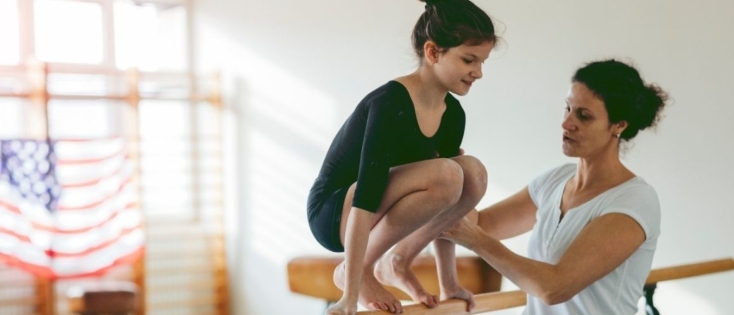


When people think about gymnastics training, they usually think about physical development first. Strength, flexibility, technique and repetition are often seen as the most important ingredients for success.
But coaches who work with gymnasts for a longer period of time quickly realise that mental development is just as important as physical development.Gymnast development is influenced by several factors, including physical growth, nutrition and psychological development.
A gymnast may have the strength and flexibility to perform a skill, but without confidence, motivation or the right mindset, progress can slow down quickly. Mental factors influence how gymnasts deal with mistakes, how they respond to challenges and whether they continue enjoying the sport over the long term.
In this article we explore several key psychological concepts in gymnastics coaching, including mindset, goal setting, feedback and motivation. Understanding these concepts can help coaches create a training environment where gymnasts not only improve physically, but also develop mentally.
Mindset: how gymnasts think about challenges
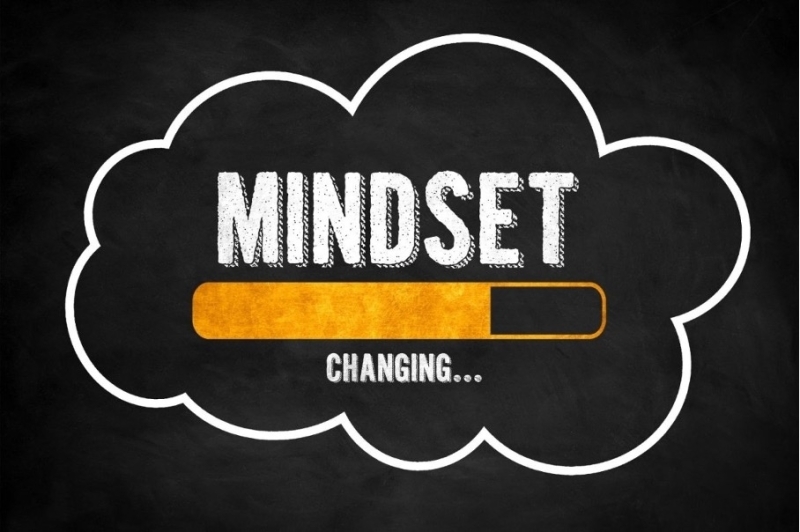
One of the most well-known concepts in psychology is the idea of mindset, introduced by researcher Carol Dweck.
According to her research, athletes generally approach challenges with either a fixed mindset or a growth mindset.
Gymnasts with a fixed mindset often believe that talent or intelligence is something fixed. Because of this belief, they may avoid difficult challenges or become discouraged when they make mistakes.
Gymnasts with a growth mindset view things differently. They believe skills can improve through practice, effort and learning. Challenges are seen as opportunities to grow rather than threats.
This difference can strongly influence behaviour in training. Gymnasts with a growth mindset often:
- try more difficult skills
- persist longer when something is hard
- learn more from mistakes
- enjoy the learning process more
For coaches, this means that the way feedback is given plays an important role. Praising effort, persistence and learning often supports the development of a growth mindset more than praising talent alone.
Goal setting in gymnastics training
Another important part of mental development is goal setting.
Goals help gymnasts stay focused, maintain motivation and track their progress over time. In gymnastics, goals can generally be divided into three types.
Result goals
Result goals focus on outcomes, such as winning a competition or placing in the top three.
Performance goals
Performance goals focus on personal performance, such as completing a routine without falls.
Process goals
Process goals focus on the quality of execution, for example maintaining straight legs during a skill or improving body tension during a routine.
While result goals can be motivating, they are often influenced by other competitors. Because of this, coaches frequently focus more on performance and process goals during training.
A well-known theory about goal setting was developed by Edwin Locke. According to this research, effective goals usually include several principles:
- clarity
- challenge
- commitment
- feedback
- manageable task complexity
When gymnasts understand their goals and regularly evaluate progress, they often become more actively involved in their own learning process.
The role of feedback in learning
Feedback plays a central role in every gymnastics training session.
Gymnasts receive feedback in different ways. Some feedback comes from the gymnast’s own body. For example, a gymnast may feel whether their balance was stable during a beam skill. This is called intrinsic feedback.
Other feedback comes from external sources such as coaches, parents or video analysis. This is known as augmented feedback.
External feedback can focus on two main aspects.
Knowledge of results
This type of feedback focuses on the outcome of a movement. For example, whether the gymnast successfully landed a skill or stayed on the beam.
Knowledge of performance
This type of feedback focuses on the quality of the movement, such as body position, timing or arm placement.
Both types of feedback can support learning, especially when they are used together.
Why video feedback can improve learning
Video feedback has become increasingly common in gymnastics coaching.
Watching a recording of their own performance can help gymnasts better understand how their movements actually look.
Research shows that video feedback can:
- reduce the number of attempts needed to learn a skill
- improve communication between coach and gymnast
- help athletes analyse both successful and unsuccessful attempts
- support learning for both beginners and advanced athletes
Video feedback is also connected to social learning theory, which explains that people can learn by observing others. Watching skilled gymnasts perform movements can therefore provide powerful learning opportunities.
Even reviewing slow-motion video on a phone can already help gymnasts better understand their technique.
Motivation: why gymnasts keep training
Motivation plays an important role in long-term athlete development. In sports psychology, motivation is often divided into two main types.
Intrinsic motivation
Intrinsic motivation comes from within the athlete. Gymnasts train because they enjoy the sport, like learning new skills or enjoy challenging themselves.
Extrinsic motivation
Extrinsic motivation comes from external rewards such as praise, recognition or expectations from others.
Research shows that intrinsic motivation is often more sustainable. Gymnasts who genuinely enjoy training are more likely to remain involved in the sport over the long term.
One important theory explaining motivation is self-determination theory, which describes three basic psychological needs:
- autonomy – feeling that you have some control and can make choices
- competence – feeling capable and confident in your abilities
- relatedness – feeling part of a supportive group
When coaches create an environment that supports these needs, motivation often increases naturally.
Bringing mental development into your training
Many coaches feel they do not have enough time to focus on mental development because physical training already requires so much attention.
However, mental development does not always require separate training sessions. Small changes in coaching style can already make a big difference.
For example, coaches can:
- introduce a monthly theme such as mindset or goal setting
- create moments for reflection after training
- allow gymnasts to set personal goals
- organise team activities that strengthen group connection
- discuss experiences during competitions or training camps
Even simple actions, such as asking gymnasts how they experienced a training session, can help develop awareness and communication.
Mental development and physical development go together
Gymnastics is not only about stronger muscles or better technique. It is also about learning how to deal with challenges, mistakes and improvement.
Gymnasts who develop mental skills such as resilience, motivation and self-reflection often progress further and enjoy the sport for a longer period of time.
For coaches, investing some attention in mental development can therefore have a lasting impact on both performance and enjoyment in the sport.
Learn more about mental development in gymnastics
This article only introduces several key concepts related to mental development in gymnastics coaching.
If you want to explore topics such as mindset, motivation, goal setting and feedback in greater depth, you can learn more in the Mental Development in Gymnastics masterclass on the Gymnastics Tools platform.
The masterclass provides practical insights and scientific explanations that can help coaches better support the mental development of young gymnasts alongside their physical training.