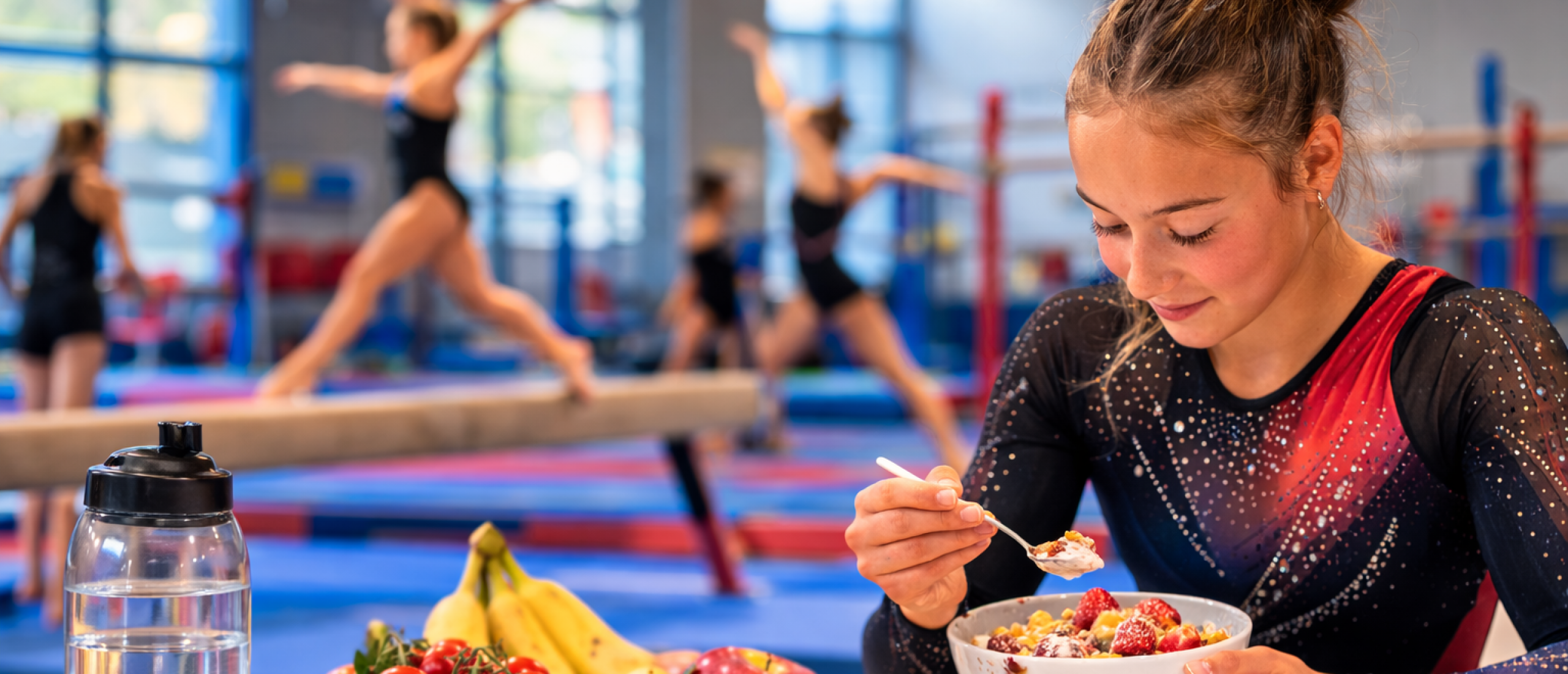

Gymnastics is often associated with strength, flexibility, technique and many hours of training. However, one factor that is sometimes underestimated is nutrition. Alongside physical growth and mental development, nutrition forms an important foundation for long-term performance in gymnastics.
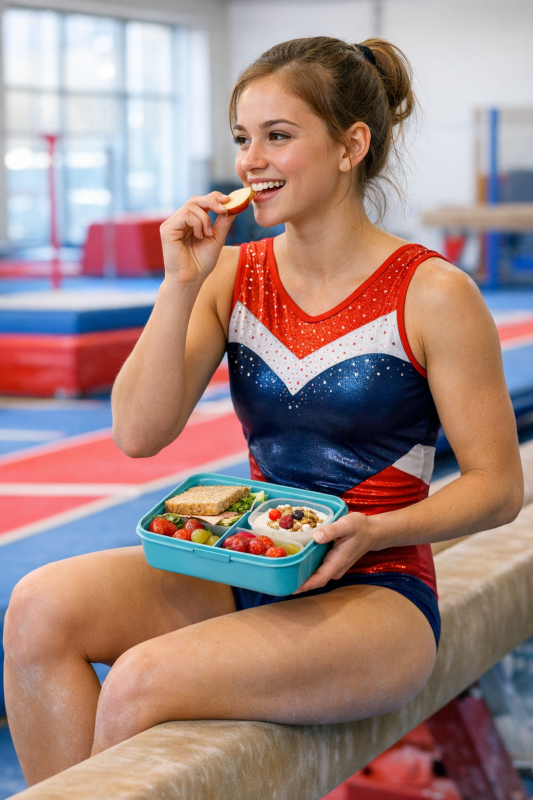
What gymnasts eat and drink has a direct influence on energy levels, recovery, muscle development and long-term health. Without proper nutrition, even the most talented athletes may struggle to perform at their best.
For both coaches and gymnasts, understanding the basics of sports nutrition can significantly improve training quality and recovery.
In this article we explore several important nutritional principles and how they support energy, recovery and performance in gymnastics.
Why the body needs energy
To move, train and perform skills, the body requires energy. This energy comes from the food we consume.
Inside the body, nutrients are converted into energy through a process called metabolism. Oxygen plays an important role in this process. Even at rest, the body continuously uses oxygen to support essential functions such as breathing, circulation and maintaining internal balance.
During exercise, the demand for energy increases significantly. Depending on the intensity of the activity, the body may use five to twenty times more energy than at rest. During very intense efforts, energy demands can increase even further.
For athletes who train frequently, this makes proper nutrition especially important.
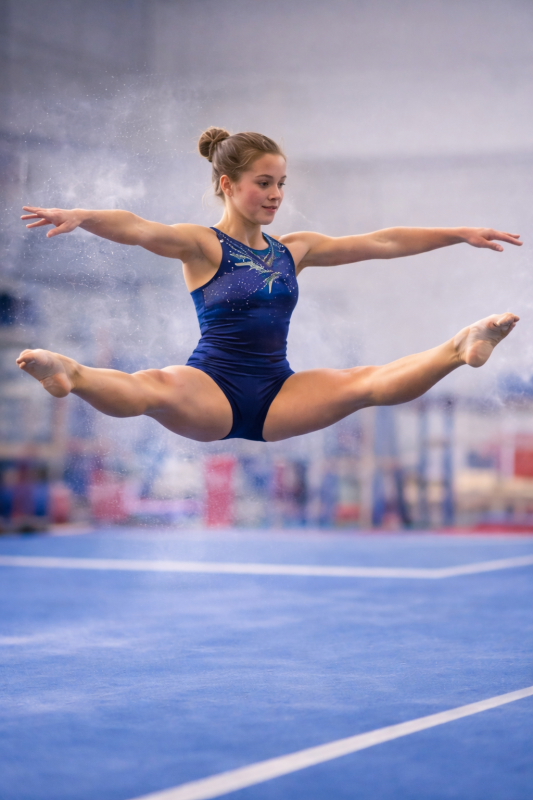
The role of carbohydrates, proteins and fats
Energy for the body mainly comes from macronutrients. These are nutrients the body needs in relatively large amounts.
The three main macronutrients are:
- carbohydrates
- proteins
- fats
Each of these nutrients plays a different role in athletic performance.
Carbohydrates
Carbohydrates are the primary fuel source for the brain and muscles, especially during high-intensity exercise.
Foods such as bread, rice, pasta, potatoes, fruit and vegetables provide carbohydrates that help maintain energy during training sessions.
Proteins
Proteins are essential for muscle repair and muscle growth. After training, the body uses amino acids from protein to rebuild muscle tissue.
Because gymnastics involves many repetitive movements and strength demands, protein intake is especially important for recovery.
Fats
Fats provide longer-lasting energy reserves and support several important functions such as brain function, hormone production and vitamin absorption.
For gymnasts, maintaining a balanced intake of all three macronutrients is important for both performance and overall health.
Why muscles need proper nutrition
Muscles are responsible for movement, strength and power.
In women, muscles account for roughly 35% of total body mass, while in men this is around 40%.
Each muscle consists of thousands of muscle fibers. These fibers contain proteins such as actin and myosin, which interact to create muscle contractions.
To maintain and repair these structures, the body requires sufficient nutrients. Without adequate energy and protein intake, muscles cannot recover properly after training.
Over time, this can lead to:
- increased fatigue
- reduced performance
- slower recovery
- higher injury risk
Proper nutrition therefore plays a key role in supporting training adaptations.
The importance of micronutrients
Besides macronutrients, the body also needs micronutrients, including vitamins and minerals.
Although they are required in smaller amounts, they are still essential for many physiological processes.
Some micronutrients are particularly relevant for athletes.
Iron
Iron plays an important role in transporting oxygen through the blood. Low iron levels can lead to fatigue and reduced training capacity.
Vitamin D
Vitamin D helps the body absorb calcium and supports bone health, muscle function and immune health.
Calcium
Calcium is essential for strong bones and teeth and also plays a role in muscle contractions.
Maintaining adequate micronutrient intake helps support both performance and long-term health.
Hydration: the often forgotten factor
Besides food, hydration is another important factor in sports performance.
During training, the body loses fluids through sweat. If these fluids are not replaced, dehydration can occur. Even mild dehydration can reduce performance and increase fatigue.
Gymnasts should aim to drink fluids before, during and after training.
Sports drinks are sometimes used during longer training sessions, but they are not always necessary. Many sports drinks contain large amounts of sugar, so they should be used carefully.
In many cases, water remains the best option.
Nutrition timing: before, during and after training
Not only what gymnasts eat matters, but also when they eat.
Before training
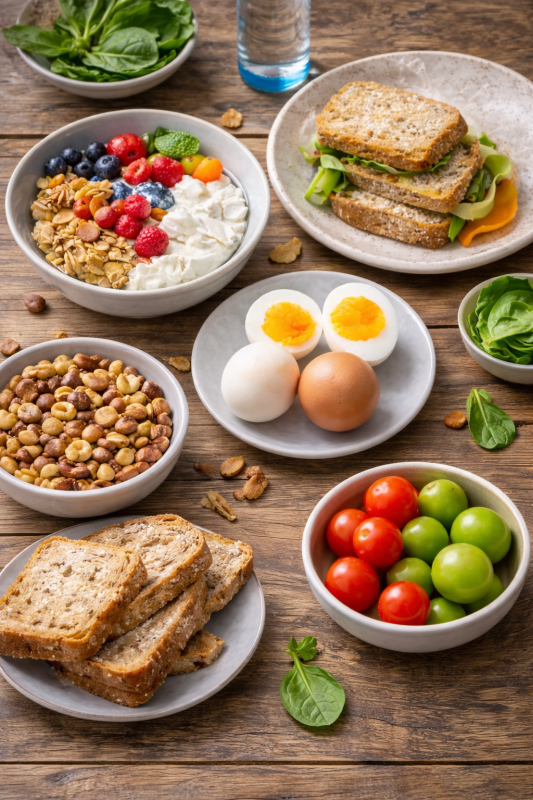
Before training, it is generally recommended to eat a meal containing carbohydrates and protein about two to three hours before exercise. This allows time for digestion and provides sufficient energy.
During training
During long training sessions, small snacks such as fruit, cereal products or yogurt can help maintain energy levels.
After training
After training, nutrition should focus on recovery. A meal containing carbohydrates, proteins and healthy fats helps replenish energy stores and support muscle repair.
Good recovery nutrition can improve how well the body performs during the next training session. Proper recovery supports both physical development and mental resilience in young gymnasts.
The role of coaches in nutrition
Coaches often underestimate how much influence they have on the eating habits of young athletes.
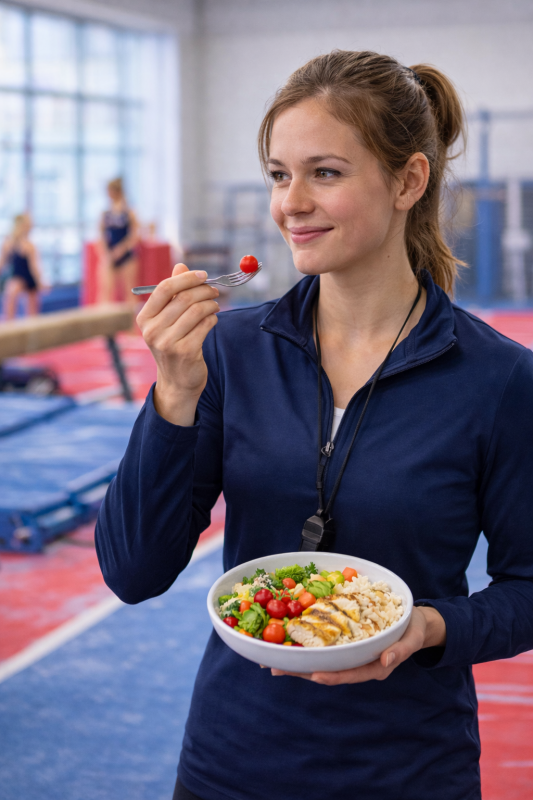
Simply setting a positive example can already make a difference. When coaches promote balanced nutrition and healthy food choices, gymnasts are more likely to adopt similar habits.
At the same time, it is important not to focus too strongly on body weight. A healthy training environment prioritises performance, health and well-being, rather than appearance.
Education and open conversations about nutrition can help gymnasts develop healthy habits without unnecessary pressure.
Small habits can make a big difference
Good nutrition does not require complicated diets or strict rules. Often it is about building consistent habits such as:
- eating balanced meals
- consuming enough carbohydrates and proteins
- staying well hydrated
- eating healthy snacks during long training sessions
- supporting recovery after training
These habits can significantly improve training quality, recovery and overall health.
Learn more about nutrition in gymnastics
Nutrition is a complex topic, and this article only introduces the basics.
If you would like to learn more about how nutrition influences energy systems, muscle function, recovery and performance in gymnastics, you can explore the full masterclass on the Gymnastics Tools platform.
The masterclass provides deeper explanations, practical guidelines and tools that coaches can apply directly in their training environment.