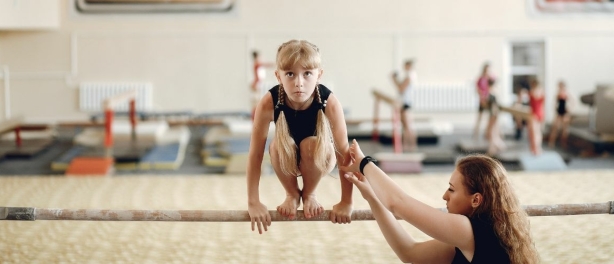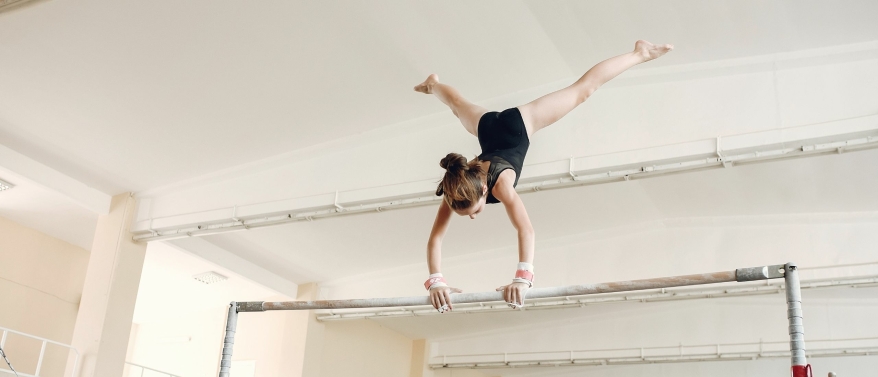


Injuries are part of gymnastics—but here’s the reality: many of them are preventable.
Whether you coach recreational gymnasts or competitive athletes, one thing is clear:
the better you understand how the body works, the better you can protect it.
And the good news? You don’t need complex medical knowledge—just the right principles, applied consistently in your training.
In this blog, you’ll discover practical, easy-to-apply insights that will help you reduce injuries and improve performance immediately.
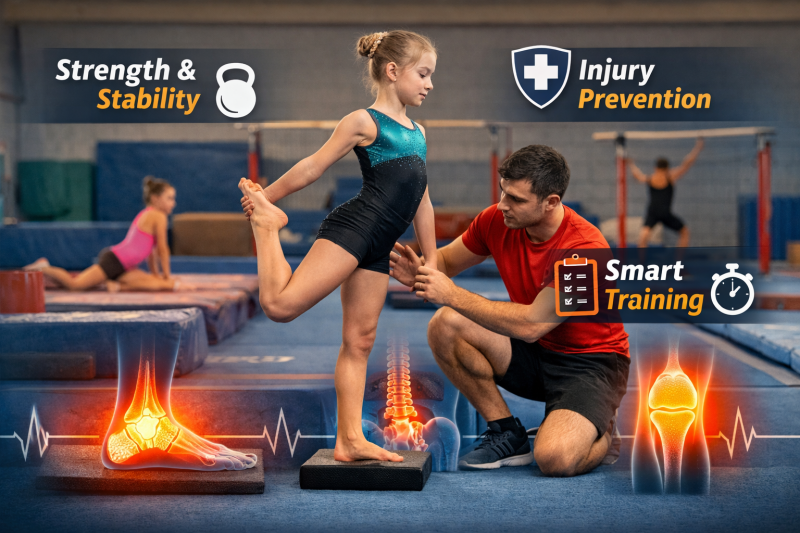
Why injuries happen (and how to prevent them)
Most injuries don’t happen by accident. They are usually the result of one key issue:
👉 a mismatch between load and capacity
When the body is exposed to more stress than it can handle—without enough recovery—injuries occur.
Common risk factors
- Training too much without sufficient recovery
- Poor technique or movement quality
- Returning too quickly after rest or injury
- Previous injuries
- Mental or physical fatigue
👉 The key to prevention? Balance training and recovery.
This is where the principle of supercompensation comes in:
after training, the body needs time to recover and adapt before it becomes stronger.
Skip recovery, and you increase the risk of injury.
The most common injury areas in gymnastics
Gymnastics places high demands on specific parts of the body.
High-risk areas
- Ankles (especially during landings)
- Knees
- Lower back
- Wrists (high load during support)
- Elbows
Understanding where injuries occur allows you to train more targeted and preventively.
Train smarter: the foundation of injury prevention
Injury prevention is not about doing less—it’s about doing things better.
Every gymnast needs a strong physical foundation to handle the demands of training.
Key physical components
- Strength → to handle load and absorb impact
- Coordination → to move efficiently and safely
- Flexibility → to achieve positions without compensation
- Speed → for explosive, controlled movements
- Endurance → to maintain quality throughout a routine
👉 The most effective approach?
Integrate these into your warm-up and training instead of treating them as separate blocks.
Small adjustments, big impact
You don’t need to completely redesign your training to reduce injuries.
Simple changes can already make a big difference:
- Add ankle stability exercises in multiple directions
- Train wrist and forearm strength regularly
- Use eccentric strength training to build resilience
- Focus on quality of movement, not just repetition
- Avoid sudden increases in training load
👉 Even small improvements can significantly reduce injury risk.
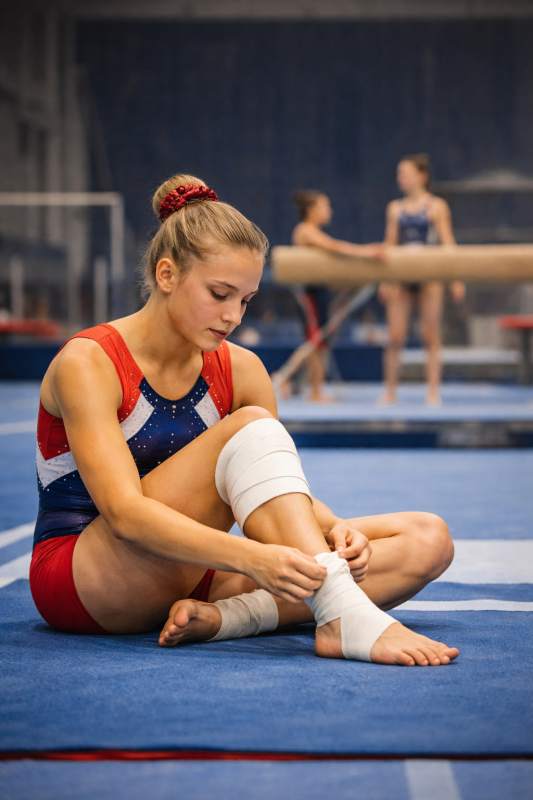
What to do when something goes wrong
Even with the best preparation, injuries can still happen.
As a coach, it’s important to:
- Recognise warning signs (pain, swelling, loss of function)
- Avoid making the injury worse
- Act quickly and appropriately
- Involve a medical professional when in doubt
👉 A safe return only happens when the athlete is:
- Pain-free
- Fully mobile
- Back to normal strength
The difference between guessing and knowing
Many coaches rely on experience—and that’s valuable.
But combining that experience with clear, evidence-based knowledge makes a real difference.
Imagine coaching with confidence in:
- Load management
- Injury mechanisms
- Smart training progression
- Practical prevention strategies
👉 That’s the difference between reacting to injuries—and preventing them.
Ready to take your coaching to the next level?
If you want to:
- Reduce injuries in your group
- Train more efficiently
- Feel more confident in your coaching decisions
- Help your gymnasts progress safely
Then it’s time to take the next step.
👉 On the Gymnastic Tools platform, you’ll find the full Injury prevention in gymnastics Masterclass, including:
- Practical exercises
- Direct applications for your training
- Clear, easy-to-implement strategies
Don’t wait for injuries to happen.Watch this video to learn how targeted strength and stability exercises can help prevent injuries in gymnastics.
👉 Start preventing them—and build stronger, more resilient gymnasts.
FAQs
How can you prevent injuries in gymnastics?
By balancing training load and recovery, improving strength and technique, and avoiding sudden increases in intensity.
What are the most common gymnastics injuries?
Ankle sprains, wrist injuries, knee problems, and lower back pain are the most common.
Why is load management important in gymnastics?
Because too much training without recovery leads to fatigue, reduced performance, and a higher risk of injury.
What is the best way to train safely in gymnastics?
Focus on quality movement, progressive overload, and integrating strength, coordination, and flexibility into training.