
Sole circle backward on uneven bars: technique, progression, drills and coaching tips
The sole circle backward on uneven bars is one of those skills that looks simple at first glance, but quickly reveals how much control, timing and body awareness it actually requires. For many gymnasts, it marks the transition from basic bar work to more dynamic and connected movements.
Usually introduced after the squat-on, this element helps develop rhythm on the bars and builds confidence for transitions from the low bar to the high bar. When performed well, it creates flow in a routine. When performed without control, it often leads to hesitation, loss of balance or rushed transitions.
In this blog, we break the skill down in a way that helps both gymnasts and coaches truly understand what is happening during the movement, and how to improve it step by step.
At the same time, if you are looking to deepen your coaching approach or add more structure to your training sessions, platforms like Gymnastics Tools can be very useful. Their recently updated platform offers a free membership, allowing you to explore drills and progressions that support skills like this one in a practical way.
What is the sole circle backward?
The sole circle backward is a circling movement on the uneven bars in which the gymnast rotates backward around the bar while maintaining contact with both the hands and the soles of the feet.
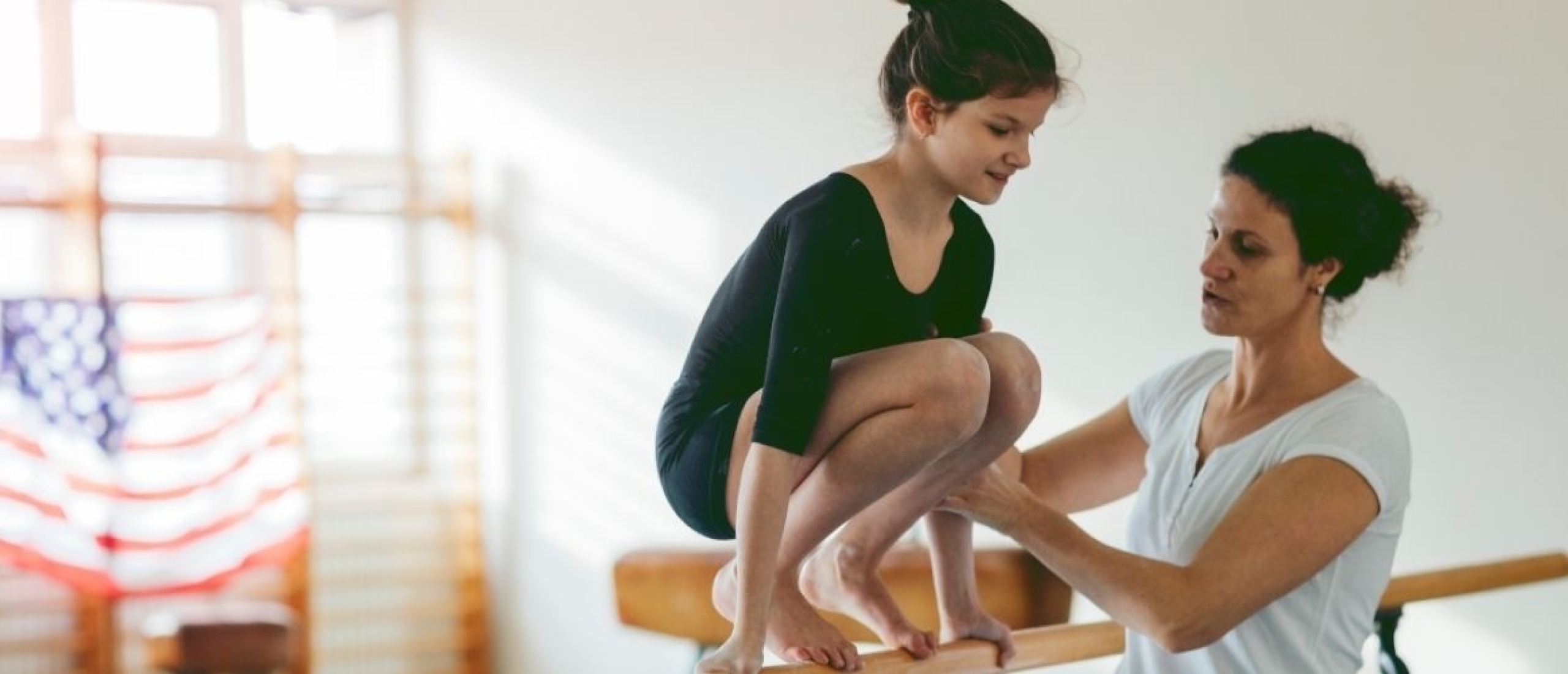
The skill begins from a squat-on position on the low bar. From there, the gymnast extends into a straight body position and initiates a backward rotation. Throughout the movement, control is key. The feet remain in contact with the bar, the shoulders guide the motion, and the body stays long until the gymnast returns to a squat-on position.
This final position is not just an endpoint, but an important setup for what comes next. In many cases, that means a transition to the high bar, which is why stability at the end of the movement is just as important as the circle itself.
The sole circle backward in 5 clear phases
One of the best ways to teach and improve the sole circle backward is by dividing the skill into clear phases. This helps gymnasts understand what should happen at each moment of the movement, and it allows coaches to identify exactly where mistakes begin.
Instead of seeing the sole circle backward as one fast circling action, it is much more useful to break it down into five separate parts. When each phase is trained with attention and control, the full movement becomes far more consistent and technically correct.
Phase 1 – entry phase: squat-on from front support
The movement begins in front support on the low bar, followed by a controlled squat-on. This first phase is more important than many gymnasts realise, because the quality of the starting position strongly affects the rest of the skill.
In this phase, the gymnast should place the feet securely on the bar with the forefoot in contact, while keeping the knees together and the shoulders positioned over the hands. The body should feel compact but stable. If the gymnast is already wobbling or shifting too much here, the extension and circle that follow will often become rushed or unbalanced.
A strong sole circle backward almost always starts with a calm and confident squat-on.
Phase 2 – extending on top of the bar
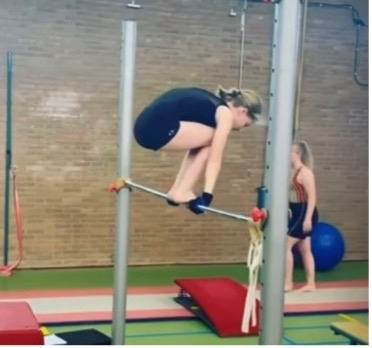
From the squat-on, the gymnast extends the legs in a controlled way into a longer body position on top of the bar. This is the moment where the gymnast creates the shape and space needed for the backward circle.
This phase should not be rushed. The shoulders stay active over the bar, the arms remain supportive, and the gymnast keeps enough tension through the core to stay balanced. If the extension is too quick or incomplete, the backward movement often starts too early and the circle loses quality.
A well-executed extension makes the next phase feel natural rather than forced.
Phase 3 – circle initiation: starting the backward movement
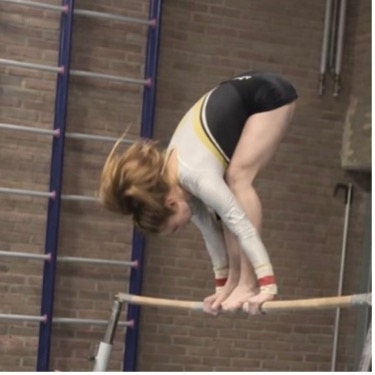
Once the gymnast is extended and balanced on top of the bar, the backward circle is initiated. This happens through a controlled backward lean, not through throwing the body backward or collapsing away from the bar.
The shoulders play a major role here. They need to stay active and move with the body, while the hands and soles continue to guide the movement. The circle should begin from the whole body working together, rather than from the arms alone.
This is often the phase where timing makes the biggest difference. A calm, controlled initiation sets up a much smoother and safer rotation.
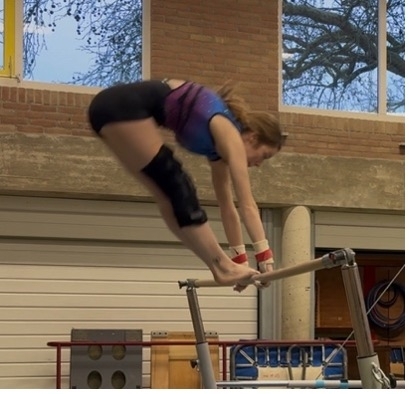
Phase 4 – rotation phase: circling around the bar
In the rotation phase, the gymnast circles backward around the bar while maintaining contact through the hands and soles. This is the most dynamic part of the skill, but even here, the goal is still control rather than speed.
The body should remain extended for as long as possible, with the core engaged and the shoulders supporting the movement. The gymnast should feel as though they are guiding the circle rather than simply being taken around by momentum.
Toward the end of the rotation, the hips begin to close slightly so the body can return efficiently to the bar. If this phase is too loose or too fast, the gymnast often struggles to finish in balance.
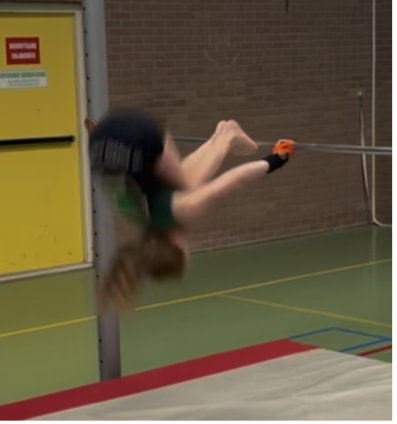
Phase 5 – final phase: returning to squat-on
The sole circle backward finishes in a squat-on on the bar. Although this is technically the final phase, it is also the setup for what often comes next: the transition to the high bar.
The most important focus here is regaining control. The gymnast should place the feet securely back onto the bar, stabilise the body and find balance before moving on. A rushed or unstable finish usually affects the quality and safety of the transition that follows.
This is why the final squat-on should not be treated as just an ending, but as a position that needs to be owned with confidence.
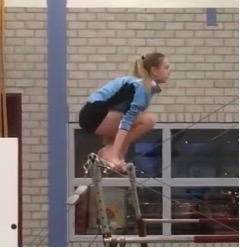
Physical requirements for a consistent performance
A sole circle backward becomes much easier to learn when the physical foundation is in place. Without it, gymnasts often compensate in ways that lead to technical errors.
Balance plays a central role, especially in the squat-on and final position. The ability to remain calm and stable on a narrow surface directly influences how controlled the circle will be.
Core strength is equally important. It keeps the body aligned during the rotation and prevents the movement from collapsing. When the core is not engaged, the circle often becomes rushed or misdirected.
In addition, shoulder stability and grip strength provide the support needed to guide the movement safely. The hands are not passive; they actively control the circle and help regulate speed.
For coaches who want to build these physical qualities in a structured way, Gymnastics Tools offers targeted exercises and progressions that can easily be integrated into training sessions. Especially with the free membership, it is a practical way to expand your training toolbox.
Building the skill step by step
Learning the sole circle backward is not about repeating the full movement over and over again. Progress comes from breaking the skill down and building confidence in each part.
It starts with mastering the squat-on. This means more than just getting the feet on the bar. The gymnast should feel stable, balanced and in control. Small adjustments in foot placement and posture can make a big difference here.
Once that foundation is solid, the focus shifts to extension. Practising how to extend from the squat-on without losing balance helps the gymnast understand the timing of the movement. This can be done on low bars, floor setups or with support.
Before performing the full skill independently, assisted work plays an important role. With proper spotting, the gymnast can experience the correct movement pattern without fear. This builds confidence and helps develop the right timing.
Only when the movement feels controlled and consistent should the gymnast move toward independent execution. At that point, the focus is no longer just on completing the skill, but on refining it.
Coaching cues that actually make a difference
In practice, simple and clear cues are often more effective than long explanations. What matters is that the gymnast understands what to feel and when.
Instead of overloading with information, it helps to guide attention to key moments in the movement. For example, focusing on staying balanced in the squat-on, extending before initiating the circle, and controlling the finish.
The best cues are short, consistent and repeated over time. They create clarity and help the gymnast build confidence in execution.
Common mistakes and how to recognize them
Most errors in the sole circle backward can be traced back to a specific phase of the movement.
A common issue is losing contact with the bar during the circle. This often indicates a lack of strength or control, but it can also be related to poor timing during the initiation.
Another frequent mistake is rushing the movement. When the circle becomes too fast, the gymnast loses the ability to control the final position. This usually leads to instability in the squat-on and makes the transition to the high bar more difficult.
It is also common to see gymnasts skip the moment of control at the end. Instead of stabilising, they immediately try to move on. This not only affects technique, but also increases the risk of mistakes.
The key is always to look at where the problem starts, not just where it becomes visible.
How gymnastics tools supports your training
For coaches and gymnasts who want to train more efficiently, Gymnastics Tools offers a structured approach to skill development.
The platform has recently been updated and gives access to a wide range of drills, progressions and coaching ideas. Because you can start with a free membership, it is easy to explore how it fits into your training.
It is especially useful when you want to save time in planning or when you are looking for new ways to approach familiar skills like the sole circle backward.
Conclusion
The sole circle backward is more than just a transitional skill. It is a key moment where balance, timing and control come together.
By understanding the movement in phases and building it step by step, gymnasts develop not only better technique, but also more confidence on the bars. For coaches, a clear structure and focused cues make the teaching process more effective and consistent.
With the right approach, this skill becomes a strong and reliable part of any bar routine.