
The cast flyaway is one of the most common dismounts on uneven bars. While earlier dismounts often involve simply letting go and landing, the cast flyaway requires a combination of swing mechanics, timing, power, and confidence. For many gymnasts, this is their very first true salto dismount from the high bar, which makes it an essential skill to build carefully and progressively.
In this blog, we will discuss:
- Why the cast flyaway is more than “just a dismount”
- What actually happens during a cast flyaway
- The different phases of the cast flyaway
- The physical requirements needed
- How to progress the cast flyaway step by step
- Technical coaching cues
- Advanced progressions after mastering the cast flyaway
Why the cast flyaway is more than just a dismount
At first glance, the cast flyaway may seem like a simple ending to a bar routine: swing, release, flip, and land. In reality, however, this skill combines many technical fundamentals. The quality of the dismount depends heavily on timing, rotation, and body control.
A gymnast needs more than courage to perform a successful cast flyaway. She also needs rhythm awareness, swing control, and the ability to actively push away from the bar at exactly the right moment. That is why this skill is so valuable in a gymnast’s development. It teaches not only how to perform a salto dismount, but also how movement is created through preparation, timing, and body tension.
This is exactly what makes the cast flyaway technically interesting — and challenging. It is honestly surprising how often coaches focus only on the release and landing, while the mistake was already made several seconds earlier. If the connection between the initial cast and the swing is off, the gymnast ends up “fighting” the skill in the air instead of performing a controlled movement. Without a strong foundation, the flyaway quickly becomes technical chaos rather than a clean, confident dismount.
What actually happens during a cast flyaway?
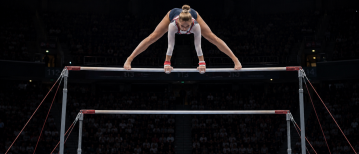
The movement starts from support on the high bar. From this support position, the gymnast initiates a cast into the backswing. During the swing, she builds momentum and body tension. Although this sounds simple, this preparation phase determines almost everything that happens afterward.
A strong swing allows the gymnast to carry built-up energy into the release instead of forcing the salto.
As the swing approaches its highest point, the most important moment of the skill occurs. The gymnast does not simply let go of the bar — she actively pushes away through the shoulders and hands. This is a crucial difference. The height and space needed for a controlled salto are created during the release itself.
After releasing the bar, the gymnast rotates backward in the air. Most gymnasts perform this skill in a tuck position because it is the most natural and controllable shape for learning the skill. By making the body compact, the gymnast increases rotational speed. She must then open at the correct moment to prepare for landing.
When all these phases connect smoothly, the cast flyaway looks effortless. In reality, that “effortless” appearance is usually the result of countless technical repetitions and smart progressions.
The salto begins long before the release
Very often, coaches only start analyzing the skill once the gymnast lets go of the bar. That is a mistake many coaches — myself included — make for years. By that point, the salto has already been decided.
The quality, height, and safety of the dismount are determined much earlier.
The foundation lies in the initial cast from support and the following swing. The way a gymnast creates tension and organizes her body during these first moments determines exactly how much energy she can carry into the flight phase.
If tension is lost early — through a soft back or passive shoulders — it will immediately show up in the air. The movement becomes messy and the salto feels forced.
As a coach, it is important to critically evaluate your observation skills. Are you focusing only on the flyaway itself, or are you analyzing the cause behind it?
Because trust me: with a cast flyaway, the problem — and usually the solution — is found in the preparation 9 out of 10 times.
The different phases of the cast flyaway
Although the cast flyaway is performed as one fluid movement, it helps enormously in training to divide the skill into clear phases. This makes it easier to identify where things are going well and where extra training is needed.
The cast phase
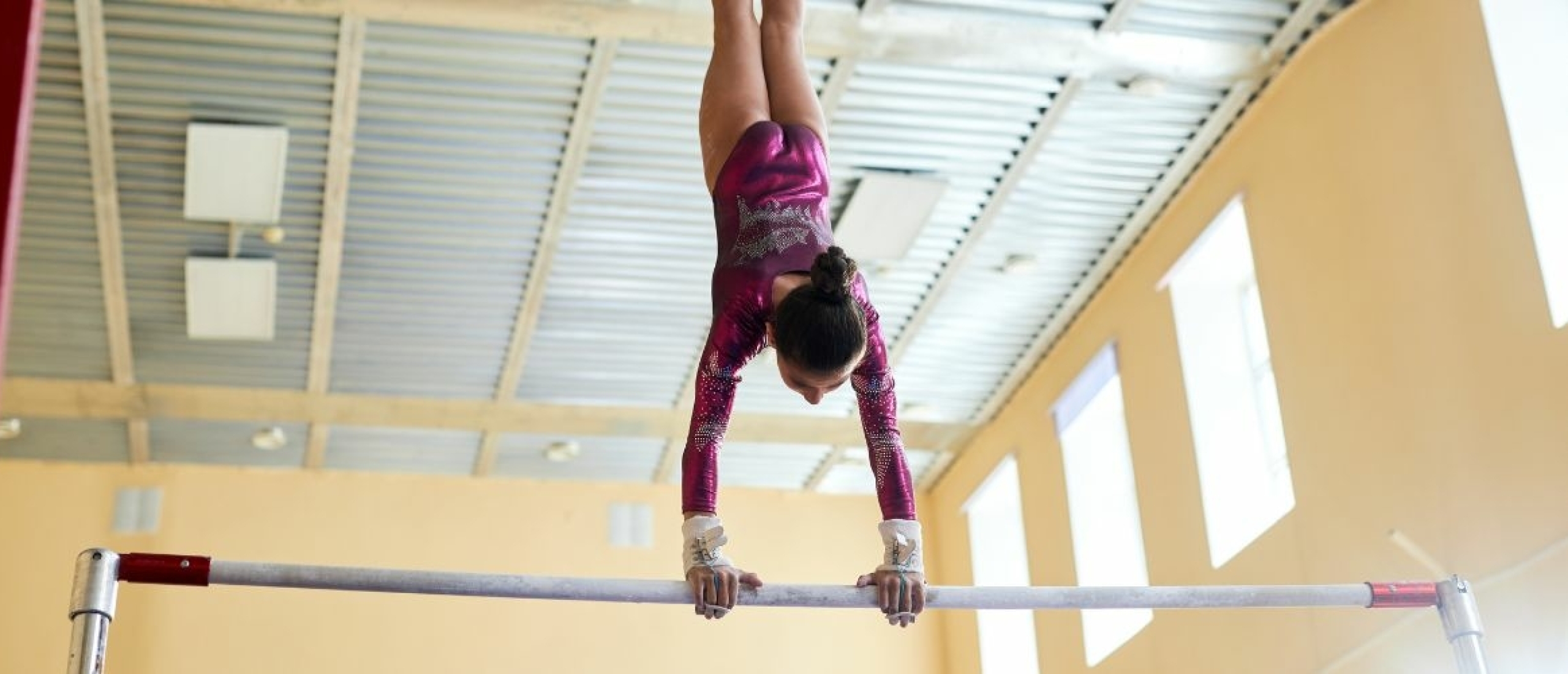
The movement begins from support on the bar. The gymnast actively pushes away from the bar to enter the swing.
During the cast:
- The shoulders open
- The upper back stays rounded and tight
- The hips remain piked enough to clear the low bar
This phase creates the setup for everything that follows.
The swing phase
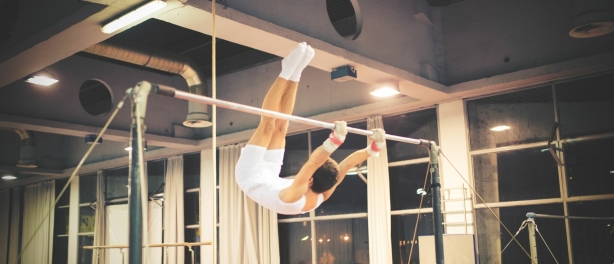
After the cast comes the swing phase. Here, the gymnast carries the energy from the cast into the backswing.
During the swing, the body stays:
- Long and active
- Legs together
- Core stable
- Shoulders open
One of the key moments during this phase is the kick action, where the gymnast actively drives the legs to continue the rhythm and direction of the swing. This helps maintain momentum into the release phase.
When the swing is too small, passive, or poorly timed, the release becomes unstable and the rotation suffers as well.
The release phase
After the swing comes the release phase. This is where the gymnast finishes the kick action and begins grouping for the salto before leaving the bar.
This is the transition point between controlled swing and free flight.
The timing here is incredibly precise:
- Releasing too early results in a low flyaway with insufficient height
- Releasing too late creates excessive upward travel and increases the risk of hitting the bar
The gymnast must find the “sweet spot” where the swing energy is optimally converted into height and rotation.
For many gymnasts, this becomes more of a feeling than a consciously calculated action. You can explain the physics endlessly, but understanding usually comes only after hundreds of repetitions and lots of air awareness.
The rotation phase
The rotation phase actually begins just before the release.
At the end of the swing, the gymnast already starts preparing for the salto by making the body smaller. The feet continue upward while the knees begin moving toward the chest before the hands even leave the bar.
This means the gymnast is already close to the final tuck position at release.
After releasing, the gymnast continues the rotation smoothly through coordinated arm and body movement.
The opening phase and landing
As the gymnast completes the rotation, she opens the body to prepare for landing on two feet.
The timing of this opening is critical:
- Opening too early may stop the rotation too soon, leading to under-rotation
- Opening too late can cause over-rotation and backward falls
After opening, the gymnast lands with:
- Two feet together
- Upright posture
- Enough body tension to absorb the landing safely and cleanly
A controlled landing is the final sign that all previous phases worked together correctly.
Progressions: step by step toward the cast flyaway
You do not simply throw a gymnast into the air and hope for the best. Good progressions build confidence and technique layer by layer.
1. Basic swing and release drills
Before introducing rotation, gymnasts should first become comfortable with swing mechanics and simple release timing.
The focus here is:
- Maintaining body tension
- Controlling the swing rhythm
- Learning to release confidently
2. The “rounded” cast drill (shoulder cast drill)
Without an active shoulder push, there is no height.
This drill focuses specifically on creating an aggressive push away from the bar using the shoulders and hands.
The gymnast learns to:
- Open the shoulders correctly
- Maintain a rounded upper back
- Generate upward direction rather than collapsing downward
3. Preparatory salto drills
Before releasing the bar, the gymnast should first understand backward rotation on the floor or from raised surfaces.
Examples include:
- Back tuck drills from stacked mats
- Salto drills from a block into a pit
- Trampoline flyaway shapes
These drills allow the gymnast to feel backward rotation without the complexity of the uneven bars.
4. Cast flyaway with spotting
Next, the elements are combined on the bars with coach assistance.
Spotting is essential here — not only for safety, but also to help the gymnast feel the correct timing and height of the dismount.
Advanced progressions after the cast flyaway
Once the basic cast flyaway is consistent, it opens the door to more advanced dismounts.
A natural next step is often the giant flyaway. Although the flight phase is very similar, the entry changes completely. Instead of generating momentum from a cast, the gymnast must now control the tremendous speed from the giant swing and convert it into height.
Gymnasts often struggle to find the new “launch point” because the bar bends more and the forces increase significantly.
Before introducing the release, the gymnast should first master an active tap swing in giants.
Other advanced variations include:
Layout flyaway
Requires much greater vertical lift and excellent timing when opening the hips.
Half-twist or full-twist flyaway
Adds axial rotation immediately after release.
Double flyaway
For gymnasts who generate enough height and control to complete extra rotation safely.
The beautiful thing about proper technical development is this:
When the first cast flyaway is taught correctly, these advanced skills are not completely “new tricks” — they are simply logical extensions of an already solid foundation.
Want to make your training sessions more effective?
At Gymnastics Tools, you can find many more specific drills, technical exercises, and practical coaching tips that you can immediately apply in the gym.
Together, we build better, more technical, and most importantly, more enjoyable gymnastics training. 🤸♀️