
The straddle dismount is a commonly used dismount on the uneven bars and, for many gymnasts, a familiar part of their routine. It is an accessible yet elegant dismount in which rhythm, control, and proper timing come together to finish the routine smoothly. For many gymnasts, this is one of the first dismounts where they actively work from support into a controlled landing, with a clear transition from the cast swing to the underswing. That is exactly why it is such an important skill to build carefully and methodically.
In this blog, we discuss:
- What happens during a straddle dismount
- What the skill looks like
- The different phases of the movement
- Which physical requirements are needed
- How to build the skill progressively
- Technical cues and common mistakes
What happens during a straddle dismount?
At first glance, the straddle dismount looks relatively simple: the gymnast swings up from support, places the feet on the bar, and swings through into the landing. In reality, however, much more is happening. The quality of the skill lies in the cooperation between the cast swing, timing, and foot placement.
The gymnast must not only feel the exact moment to place the feet on the bar but also maintain enough control to allow the movement to flow smoothly into the underswing.
This skill requires rhythm, body tension, and coordination. Because all of these components come together so clearly, the straddle dismount forms a valuable foundation for further development on uneven bars. It teaches a gymnast how to continue a movement fluidly instead of interrupting it midway, which is essential for more advanced bar elements later on.
What does the skill look like?
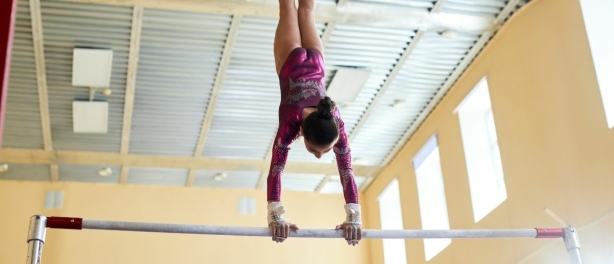
The movement starts from a support position on the high bar. From there, the gymnast initiates a cast swing, building tension through the body and creating rhythm in the movement. During the cast, the body rises upward and slightly forward.
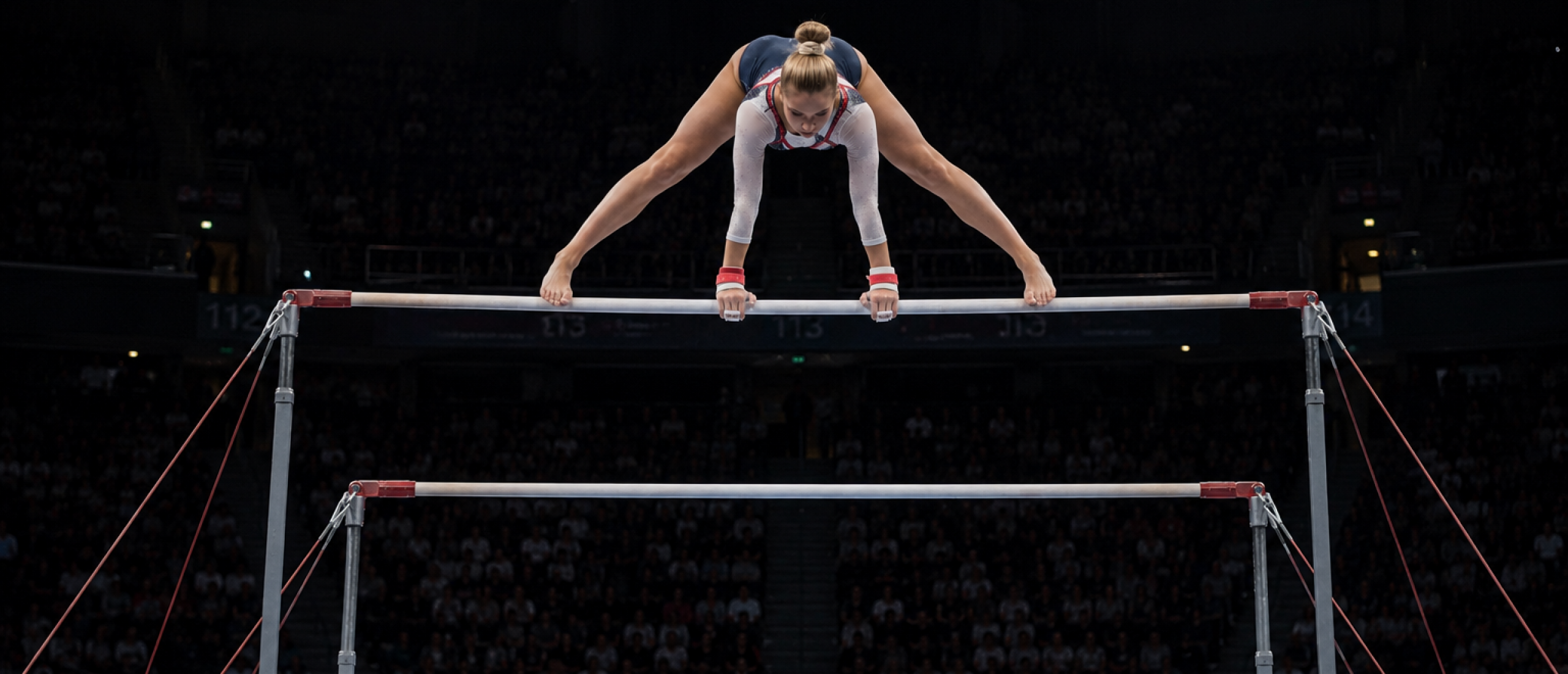
At the right moment, the gymnast places the feet on the bar outside the hands. This moment requires precise timing and control. Once the feet are placed, the gymnast transfers the movement into an underswing. The body swings underneath the bar toward the landing area. At the end of the swing, the gymnast releases the bar and lands on two feet on the mat.
When all phases connect properly, the result is a fluid and controlled dismount.
The movement actually begins long before the feet touch the bar. Sometimes it seems as though the straddle dismount only starts when the feet are placed, but the quality of the skill is determined much earlier. The cast swing forms the foundation. If the cast is too small, passive, or lacks body tension, it becomes difficult to place the feet correctly and continue the movement smoothly.
A strong cast allows the gymnast to carry momentum through the entire skill rather than making corrections halfway through. This creates a movement that feels controlled and effortless.
The different phases of the straddle dismount
Although the straddle dismount is one continuous movement, it helps in training to divide the skill into clear phases.
The cast swing phase
The movement begins from support. The gymnast performs an active cast swing while opening the shoulders and keeping the body long and tight. A good cast for the straddle dismount has both rhythm and direction. The legs open actively so the movement rises in a controlled way.
The foot placement phase
At the highest point of the cast, the gymnast places the feet on the bar outside the hands. This moment requires precision. The feet must be placed actively and with control, without interrupting the flow of the movement. The body remains tight so the transition into the next phase stays smooth.
The shoulders stay above the bar, and the feet land outside the hands so the gymnast is almost sitting above the bar.
The underswing phase
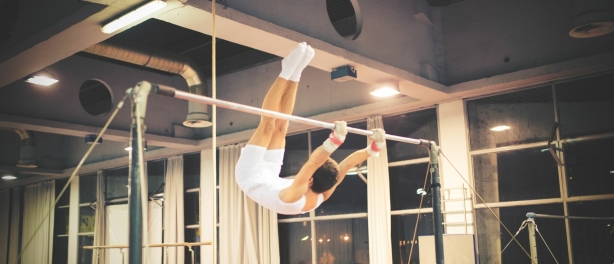
After placing the feet, the gymnast continues directly into the underswing. The hips open while the body swings underneath the bar. During this phase, it is important that the movement keeps flowing and does not slow down. Body tension helps maintain direction and speed throughout the swing.
The flight phase
At the end of the underswing, the gymnast drives the feet away from the bar. At the same time, the hands release the bar, allowing the body to become fully airborne.
From this flight phase, the gymnast lands on two feet with an upright posture and enough body tension to remain stable. A controlled landing is the result of all the phases working together successfully.
Which physical requirements are needed?
Although the straddle dismount is technically approachable, the skill still requires several important physical foundations. Without these basics, it becomes difficult to perform the movement with true stability and control.
The most important physical requirements are:
- Shoulder strength: essential for creating a strong cast swing and maintaining support on the bar.
- Core tension: keeps the body in a straight, controlled line throughout the movement.
- Coordination and timing: multiple actions must happen at exactly the right moment for smooth rhythm.
- Flexibility: especially in the shoulders and hips, allowing the gymnast to reach the necessary technical positions more easily.
General body awareness also plays a major role. A gymnast who is comfortable supporting her own body weight on the bar will naturally perform with more confidence. That confidence is immediately visible in the execution: the result becomes cleaner and more consistent.
How do you progressively teach the straddle dismount?
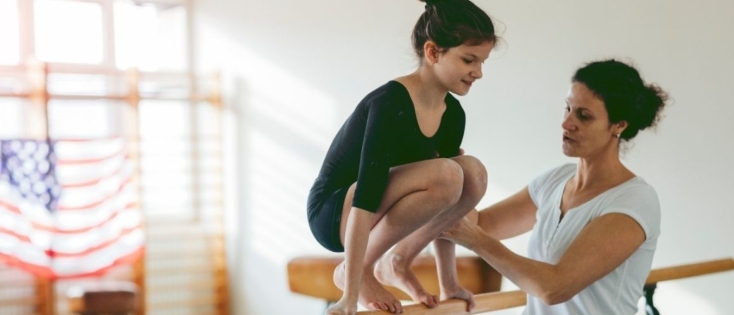
The straddle dismount can be built effectively by separating the skill into smaller parts. The cast swing can first be practiced on its own, with emphasis on body tension and rhythm.
Next, the foot placement can be trained separately, for example from the floor to a floor bar or with blocks leading up to the low bar.
The underswing can then be practiced independently so the gymnast learns to continue the movement smoothly. For example, practice the straddle dismount from a block first. This allows the gymnast to focus entirely on the underswing without worrying about the cast.
The cast swing itself can also be improved by swinging over soft training equipment such as a trainer barrel or wedge mat. These drills help train timing and encourage the gymnast to create a smooth, arched flight into the landing.
Once the individual parts are mastered, they can gradually be connected into one continuous movement. By using mats and supportive equipment, gymnasts can practice safely and confidently. This step-by-step progression helps gymnasts learn the skill in a structured and effective way.
Technical cues and common mistakes
Short and focused coaching cues are often the most effective. Giving one clear focus point per phase helps the gymnast keep the movement organized. Too many instructions at once can quickly become overwhelming, especially in a skill where timing is so important.
Many mistakes occur because one phase of the movement breaks down. A passive cast, for example, often causes the feet to arrive too late on the bar, disrupting the rhythm. Another common issue is losing body tension during foot placement. When this happens, the movement collapses and the underswing loses momentum.
The release timing ultimately determines the quality of the flight phase. If the feet leave the bar too early, the gymnast loses the smooth arc of the movement and lands abruptly. By identifying exactly where the movement breaks down, coaches can make much more effective corrections.
Coaching cues per phase
Cast swing phase
- Make the cast active
- Keep tension in the body
- Open the legs actively
Foot placement phase
- Place the feet just behind the leading foot on the bar
- Bring the shoulders above the bar
- Keep the body tight
Underswing phase
- Continue pulling through the arms
- Fully straighten the legs
- Push the feet firmly against the bar
Release phase
- Drive the feet upward
- Stay maximally tight
- Make the body long
- Hold the bar slightly longer
Further development of the straddle dismount
Once the straddle dismount is mastered, the skill can be further developed. Gymnasts can work toward cleaner execution and a more fluid swing. The dismount can also be performed with a half turn before landing.
The foundation developed through this skill supports the learning of more advanced dismounts and techniques on uneven bars, such as underswing saltos. Because the straddle dismount contains so many important basics, it forms a valuable step in a gymnast’s long-term development.
Final thoughts
The straddle dismount is an accessible yet highly technical uneven bars dismount that demands a lot from a gymnast. Success depends on finding the right balance between multiple abilities.
The skill ultimately relies on a strong combination of:
- Timing
- Coordination
- Body control
- Tension
At Gymnastics Tools we share practical gymnastics coaching insights, drills, and technical breakdowns to help gymnasts and coaches improve step by step
Pro tip for coaches: focus on the process, not just the landing
It is tempting to focus only on the landing, but in the straddle dismount, the real improvements happen in the transitions between phases. By consistently breaking the skill down into phases during practice, you help gymnasts truly understand and control the biomechanics of the movement rather than relying on luck.
Those small technical details in the cast swing determine the quality of the entire dismount. If the landing repeatedly goes wrong, go back to the very first second of the movement. That is usually where the real problem begins.
This methodical focus creates the foundation for everything gymnasts will later learn on uneven bars, including more advanced underswing salto dismounts.