
You walk into the gym… and you already feel it
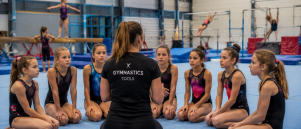
Too many gymnasts.
Not enough help.
And no clear way to keep everyone moving.
So you start the lesson.
Some are waiting.
Some are messing around.
And you can feel you're losing them.
You’re constantly switching between giving instructions, correcting mistakes, and just trying to keep control.
And at the end of the training, you catch yourself thinking:
“Was this actually a good lesson?”
The frustrating part? It’s not you
Most coaches assume it’s because they don’t have enough time… or enough help… or maybe just not the right exercises.
But that’s usually not the real issue.
👉 The real problem is the structure of your lesson.
Because most gymnastics lessons are still built in a way that only works when you have multiple assistants.
And when you’re coaching gymnastics alone, that structure starts working against you.
Why your lessons start to feel chaotic
If your lesson is built around apparatus like beam, bars, or vault, this is what often happens:
Gymnasts are waiting their turn
You repeat the same instructions over and over
You’re constantly managing instead of coaching
Only a few gymnasts are actually active at the same time
So instead of improving skills…
👉 You’re just trying to keep the lesson from falling apart.
And that’s exhausting.
And slowly, it starts to take the fun out of coaching.
What most coaches don’t realize
Many coaches simply copy the structure they experienced themselves.
Multiple apparatus. Fixed rotations. Everyone doing the same thing.
And yes — that can work.
👉 But only when you have enough assistants.
When you don’t, it creates:
Idle time
Loss of focus
Fewer real coaching moments
And your lesson starts to feel messy, even though you’re trying your best.
A different way to structure your lesson
What changed everything for me was this:
Stop building your lesson around apparatus
Start building your lesson around structure
Instead of 3 big setups, work with 2 clear “cores” or stations, each with multiple smaller exercises inside them.
This simple shift changes everything.
More gymnasts are active at the same time
Less waiting
Fewer repeated instructions
More time to actually coach
Why this works (especially when you’re alone)
When you work with smaller exercises:
Gymnasts can train more independently
You don’t need to control every second
You can focus on giving real feedback
Instead of managing behavior all the time.
And your lesson starts to feel:
Calm
Structured
Under control
How to apply this in your next lesson
You don’t need to completely change everything overnight.
Start small:
Break skills down into smaller parts
Use multiple exercises within one goal
Reduce the number of instruction moments
Use visual support (cards or short videos)
So gymnasts can keep moving — even without you explaining everything again.
What changes when you do this
Something shifts when your structure improves:
You feel more in control
Your gymnasts stay active
There’s less chaos
Your coaching becomes more effective
You’re no longer just “getting through” your lesson.
👉 You’re actually coaching again.
You don’t need more exercises. You need a system
If your lessons often feel chaotic, it’s not because you’re a bad coach.
It’s because you’re working with a structure that doesn’t match your reality.
And once you fix that…
Everything becomes easier.
Want help with this?
If you’re tired of just getting through your lessons
and you want to walk into the gym with a clear plan and real confidence…
Then it’s time to stop guessing.
On Gymnastics Tools, you’ll find:
Ready-to-use lesson structures
Exercises and progressions
Coaching tools that actually save you time
Built specifically for coaches who:
Coach real groups
Have limited time
Often work without assistants
So you can coach with confidence — instead of chaos.